Fall Detection Device: Lightweight and Practical Fall Sensor
Overview
We developed a fall detection device during HARD Hack 2024, a 24-hour IEEE hackathon. The device uses a G-sensor to detect falls and employs peer-to-peer (P2P) communication to transmit distress signals to nearby devices. This project showcased our innovation in wearable technology, soldering, and embedded systems design, earning us the 1st Place Award.
Introduction
Falls pose a significant risk, especially for the elderly or those in hazardous work environments. Our device addresses this issue by providing a lightweight, real-time solution for fall detection and alerting nearby users via P2P signals. The system combines practicality with functionality, aiming to improve safety in real-world applications.
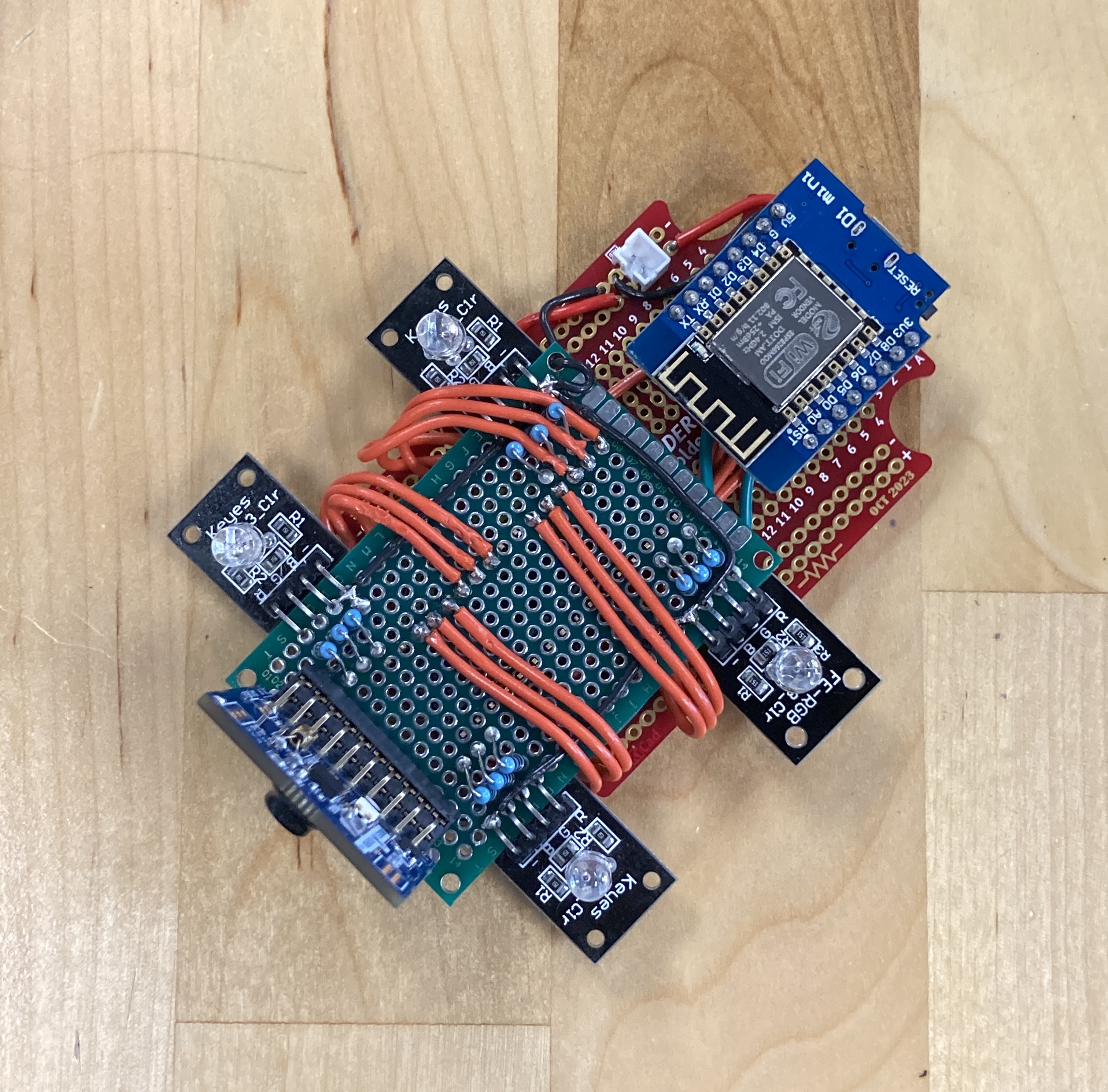
Hardware Setup
- Core Sensor: G-sensor for detecting sudden accelerations and decelerations indicative of falls.
- Communication Module: P2P communication enabled through wireless relay.
- Optimized Design:
- Soldered components to minimize weight and size.
- Durable and portable for seamless integration into wearable devices.
Software Architecture
- Microcontroller Integration: Programmed fall-detection algorithms onto the microcontroller.
- Signal Transmission: Implemented P2P communication protocols to ensure timely and reliable distress alerts.
- Programming Language: C++ via Arduino
Key Features
1. Accurate Fall Detection
- Used G-sensor thresholds to identify sudden impacts and orientation changes characteristic of falls.
- Calibrated for sensitivity to minimize false positives while maintaining reliable detection.
2. Peer-to-Peer (P2P) Alert System
- When a fall is detected, the device immediately sends a distress signal to nearby devices within range.
- Enables quick response by alerting others in the vicinity.
3. Optimized Practicality
- Soldered components for reduced weight and improved durability.
- Compact design ensures it is comfortable to wear and suited for real-world applications.
Challenges and Solutions
Challenges:
- Accuracy in Fall Detection: Avoiding false positives caused by normal activities like sitting or jumping.
- Device Weight and Size: Ensuring comfort and portability for end users.
- Signal Transmission Range: Balancing power consumption and effective communication distance.
Solutions:
- Tuned G-sensor thresholds and validated through rigorous testing.
- Soldered components to create a lightweight, compact design.
- Optimized P2P protocols for reliable communication within a defined radius.
Results
- Real-time fall detection with high accuracy.
- Lightweight and wearable design suitable for prolonged use.
- Seamless P2P signal transmission to nearby devices, enabling prompt response.
Achievements
- 1st Place Winner: HARD Hack 2024, IEEE.
- Demonstrated a working prototype within 24 hours as a team of four, showcasing innovation and collaboration under tight deadlines.
Future Work
- Expanding communication range with mesh networking.
- Integrating GPS for geolocation of the wearer.
- Enhancing battery efficiency for longer operation.
Conclusion
This project highlights the fusion of embedded systems, wearable technology, and wireless communication to address a critical safety concern. Winning 1st Place at HARD Hack 2024 underscores the potential of our device for real-world impact, combining innovation with practicality.
Acknowledgments Special thanks to the IEEE HARD Hack 2024 organizers and our team members for their dedication and creativity during this 24-hour challenge.